

 See My Latest Article on HelloNation
Golfers often look for complicated fixes when the real problem is a small habit repeated over time. Poor setup, rushed decisions, inconsistent practice, and misunderstandings about simulator data can all make improvement harder than it needs to be.
For residents of Shakopee, MN, indoor practice can be especially useful during cold, wet, or windy months. It can also reveal problems that are difficult to notice during a normal round. The key is using practice time with a clear purpose rather than simply hitting more balls.
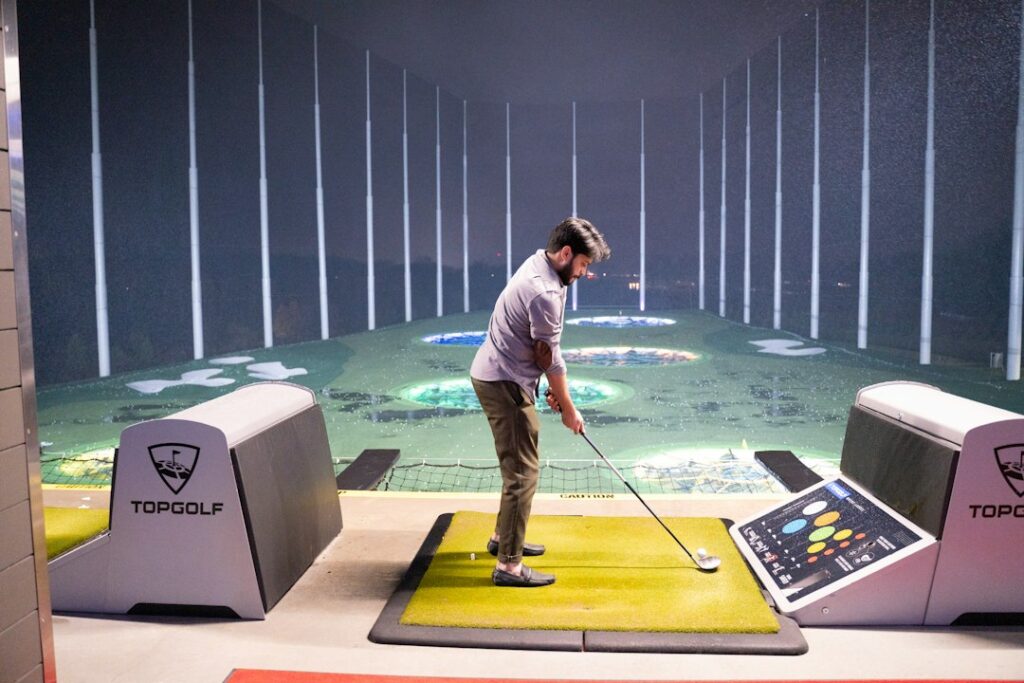
Are golfers standing incorrectly at address?
Yes. Many swing problems begin before the club moves. Golfers may stand too far from the ball, crowd it, place too much weight on the heels, or allow the shoulders and feet to point in different directions.
A sound address position does not need to look identical for every golfer, but it should provide balance and room for the club to move naturally.
Check these basics:
- Feet should be positioned comfortably apart, with enough width to maintain balance.
- Weight should be distributed near the middle of the feet rather than heavily on the heels or toes.
- Arms should hang naturally instead of being pushed toward or pulled away from the body.
- The ball position should match the club. Shorter clubs generally require a more central position, while longer clubs are usually played farther forward.
- The body should be aligned to the intended target, not merely to the edges of a mat or hitting area.
A useful practice test is to set up, step away, and look down the target line. Golfers are often surprised by how far their alignment differs from what they felt.
Is trying to hit the ball harder causing inconsistent shots?
Often. Extra effort can increase clubhead speed, but it can also change posture, timing, balance, and the path of the club. A golfer who swings at maximum effort may produce an occasional impressive shot but struggle to repeat it.
Distance should be developed through centered contact, efficient movement, and appropriate equipment—not constant maximum effort.
Try hitting a series of shots at approximately 70 to 80 percent effort. Focus on:
- Finishing in balance
- Maintaining posture through impact
- Producing consistent contact
- Starting the ball near the intended target
If contact and direction improve at a lower effort level, the problem may be timing rather than a lack of strength. Once a repeatable motion is established, speed can be added gradually.
Are golfers practicing without a specific goal?
Yes, and this is one of the most common mistakes. Hitting a bucket of balls without a plan can create activity without meaningful feedback. A golfer may finish practice feeling tired but still be unsure what changed.
Each session should have a simple purpose. Examples include:
- Improving strike location with short irons
- Starting the ball on a consistent line
- Reducing a slice with the driver
- Practicing distance control on partial shots
- Rehearsing pre-shot routines
- Testing how different clubs perform in the wind
A useful practice session may include a short warm-up, focused technical work, and a transfer exercise that resembles actual play. For example, after working on iron contact, alternate clubs and targets instead of hitting the same shot repeatedly.
Are simulator numbers being misunderstood?
Golf simulators can provide valuable information, but individual numbers should not be treated as a complete diagnosis. A golfer may focus on distance while overlooking launch direction, strike quality, spin, or dispersion.
The most useful measurements are the ones that answer a specific question. Depending on the system, these may include:
- Carry distance rather than total distance
- Ball speed and club speed
- Launch angle
- Spin rate
- Face angle and swing path
- Angle of attack
- Shot dispersion
A single shot is rarely enough to establish a pattern. Ten reasonably similar swings provide more useful information than one unusually long or short result.
Indoor conditions can also affect interpretation. The ball may behave differently from an outdoor shot because of the hitting surface, limited visual depth, room lighting, or a golfer’s reaction to the screen. Simulator data is most helpful when reviewed across multiple swings and connected to what the golfer actually feels.
Does changing equipment too quickly solve swing problems?
Usually not. Equipment can influence performance, but frequent changes may make it difficult to identify the actual cause of inconsistent shots. A golfer may switch clubs, shafts, grips, or loft settings before determining whether the main issue is alignment, strike location, or swing timing.
Before making changes, track a few basic patterns:
- Where the ball contacts the clubface
- Whether misses start left, right, high, or low
- Whether the problem appears with one club or several
- Whether fatigue changes the result
- Whether the miss occurs during full swings, partial swings, or both
If the same miss appears across several clubs, technique or decision-making may be more relevant than equipment. If only one club behaves differently, the club itself may deserve closer attention. This distinction prevents golfers from using new equipment as a substitute for useful diagnosis.
Are golfers ignoring short-game and putting practice?

Many players spend most of their practice time on full swings even though scoring problems often come from shots inside 100 yards. A golfer who hits long drives but struggles with distance control, chips, bunker shots, or short putts may not see lower scores.
Short-game practice should include more than trying to hole every shot. Work on landing locations, rollout, trajectory, and speed control.
For putting, vary the distance and include imperfect starting positions. Practice should develop the ability to leave the ball close, not only the ability to make short straight putts. Lag putting and short putts require different skills.
Indoor practice is particularly useful for rehearsing stroke length, contact, setup, and routine. Outdoor conditions still matter, but a controlled environment can help isolate technique before adding uneven lies or changing weather.
Are golfers failing to account for seasonal conditions?
Seasonal conditions affect both practice and expectations. In Shakopee, winter often limits outdoor play, while spring may bring wet ground and changing temperatures. These conditions can alter carry distance, turf interaction, ball flight, and physical readiness.
Cold weather can reduce flexibility and make it harder to produce normal speed. Wet or soft ground may change how the club moves through impact. Wind can expose poor decision-making even when the swing itself is reasonable.
During the off-season, golfers can focus on:
- Balance and mobility
- Reliable setup habits
- Centered contact
- Club selection based on carry distance
- Pre-shot routines
- Consistent practice rather than occasional long sessions
When outdoor play resumes, allow time to adjust. Indoor numbers should be treated as a reference, not a guarantee of exact outdoor performance in every temperature or lie.
Are golfers making technical changes during a round?
Swing changes are best tested during practice, not while trying to post a score. A golfer who thinks about grip pressure, wrist position, hip movement, club path, and head position at the same time often becomes slower and less decisive.
During a round, choose one simple reminder tied to the current goal. Examples include “finish balanced,” “smooth tempo,” or “pick a clear target.” After the round, record what happened and use practice time to investigate the cause.
A practical post-round review can ask:
- Which misses occurred most often?
- Were they connected to certain clubs or lies?
- Did poor decisions create avoidable trouble?
- Did the swing change under pressure?
- Were fatigue, cold, wind, or pace factors?
This approach separates playing from experimenting and produces more useful practice plans.
How can golfers avoid improvement plateaus?
Plateaus often occur because practice becomes repetitive or because progress is measured only by score. A golfer may be improving contact or dispersion even when scores remain unchanged for a period of time.
Track several measures instead of relying on one result:
- Average carry distance
- Left-to-right dispersion
- Number of solid strikes
- Up-and-down attempts
- Three-putt frequency
- Quality of decisions from difficult lies
Set a narrow goal for several sessions, then review the results. Consistent, measurable practice is more informative than changing techniques every few days. The most productive golfers usually focus on one or two priorities at a time and give those changes enough repetition to become familiar.